
 Nederlands
 English
 Deutsch
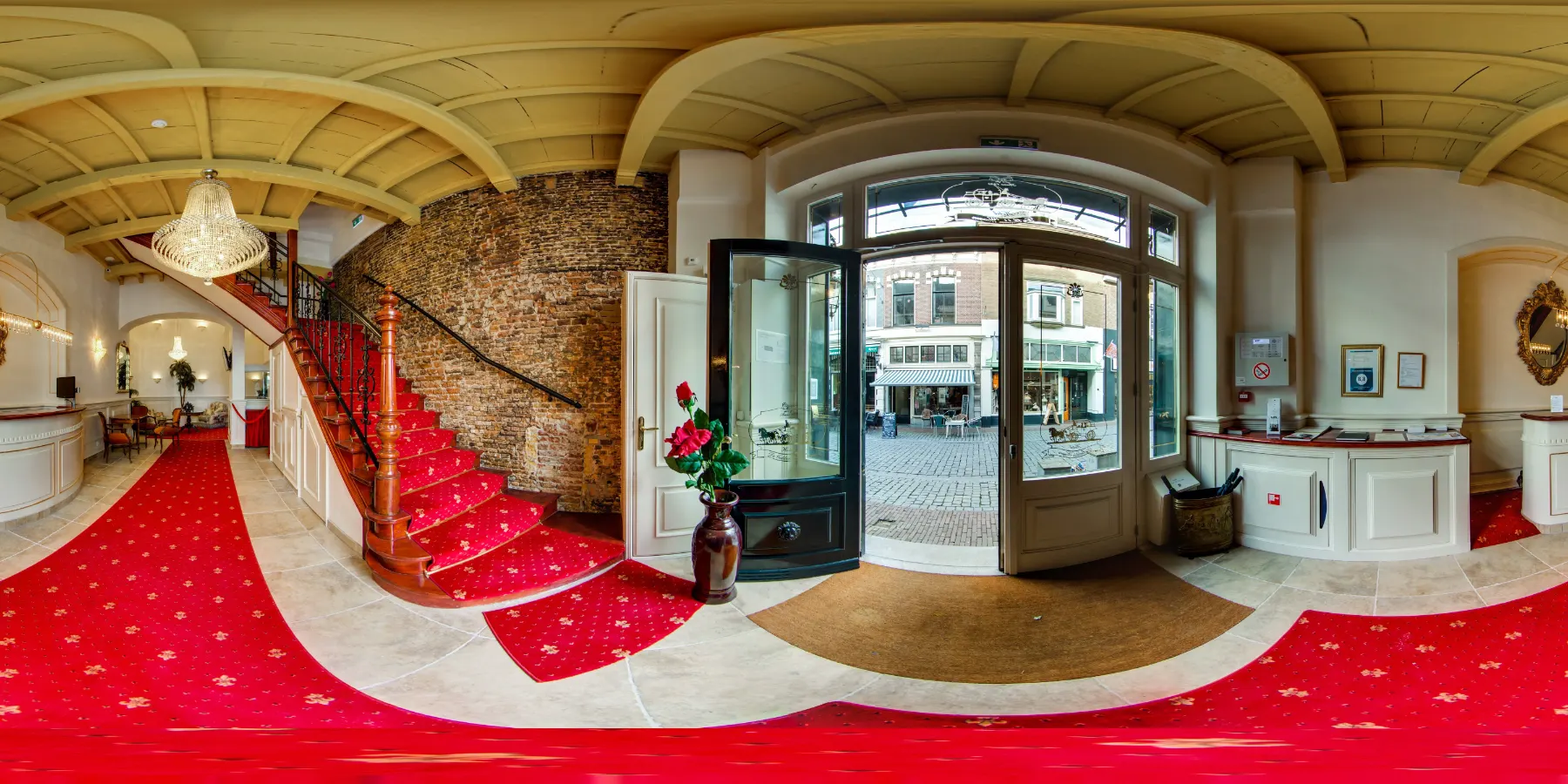
On the oldest shopping street in the Netherlands stands one of Nijmegen's monumental buildings: a town castle that, over the centuries, housed merchants, mayors and — for a single evening — an emperor. Today the building bears the name De Gulden Waagen.
Walk down the corridor and you can still see original battlements; in the arrival hall are walls coated with pitch, from an age when the plague was kept at bay with superstition and tar. This chapter follows the building from 1425 to the present day.
Origins
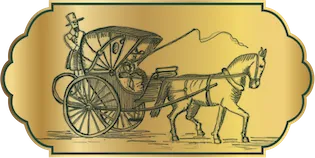
The name comes from the golden coach that stood at the Hezelpoort gate in the Middle Ages. From here, distinguished guests — in those days arriving from Holland, as Nijmegen then belonged to the city of Cleves — were taken to the castle on the Valkhof. The foundations of that castle still lie in the Valkhof park.
" In 1810 Napoleon Bonaparte paid a visit to Nijmegen — one of the distinguished guests led to the Valkhof via the Gulden Waagen.
The horses and the coach itself were stabled in the Gulden-Wagen-gas, the alley that still lies opposite the hotel.
Traces in the walls
The building was originally a town castle. Original battlements can still be seen in the corridor; in the arrival hall, restorers discovered walls with medieval pitch, applied to keep the plague out — superstition of real architectural-historical value.
In the Dille & Kamille shop, now part of the building, a 15th-century hearth came to light. Its firebacks show two crowned lions facing each other — a motif experts consider typical of the period. It may have been commissioned by Jacob Leeuwens, who lived here in 1645. Behind this hearth, researchers found even older fireplaces.
The ceiling beams date from around 1450. Excavation also revealed a second floor some 50 centimetres below the present one — complete with tiling and a barrel-vaulted cellar, now hidden beneath the parquet.
Owners through the centuries
The building was once home to mayors who, as was customary at the time, were both city administrators and traders — salt boilers and timber merchants among them. Over the centuries it changed hands many times.
In 1729 it passed to Christoffel van den Berg and his wife Anna Martina van Benthem. Their portraits hang in the Valkhof Museum, with replicas in the hotel's reception room. The town castle itself can be seen in a large bird's-eye painting by Feldman from 1669, also in the Valkhof Museum.
" With thanks to Dr Willy Niessen, who recorded the residential history of the Lange Hezelstraat, and the Jaspers family, who restored the building to its present state.
Today De Gulden Waagen is a hotel in the heart of Nijmegen's car-free centre — lively by day, and by night returning to the calm the building has known for centuries.
Rooms & suites
The hotel has three room types, each with a safe, air conditioning and free Wi-Fi. The suites are generously sized — with their own mini-fridge and a spacious bathroom with shower or bath — and are well suited to longer stays; some have a balcony or kitchenette.
The Junior Suite Spa is the only room with its own whirlpool bath, alongside a walk-in shower — thirty square metres on a high floor, reachable by lift.
The double rooms are available with or without a balcony.
" Some rooms look out over the oldest shopping street in the Netherlands — medieval Nijmegen at breakfast.
Practical: location & parking
The hotel is on the Lange Hezelstraat, in the car-free heart of Nijmegen — among distinctive shops and restaurants, within walking distance of the Valkhof and the Grote Markt.
Parking is available at the Oude Stad P2 open-air car park, Heselaan 14, about a 5-minute walk away: the nearest public parking. €2.60 per hour (9 am–6 pm), €0.50 per hour (6–9 pm), €15 per day at most.
Sources & notes
- 1 Dr Willy Niessen, De bewoningsgeschiedenis van de Lange Hezelstraat tussen 1400–1850 (residential history of the Lange Hezelstraat, 1400–1850).
- 2 Valkhof Museum, Nijmegen — portraits of Van den Berg and the bird's-eye painting by Feldman (1669).
- 3 Restoration to its present state: the Jaspers family.
- 4 waagenhotelgroup.com/historie and /kamers, consulted 26 August 2026.